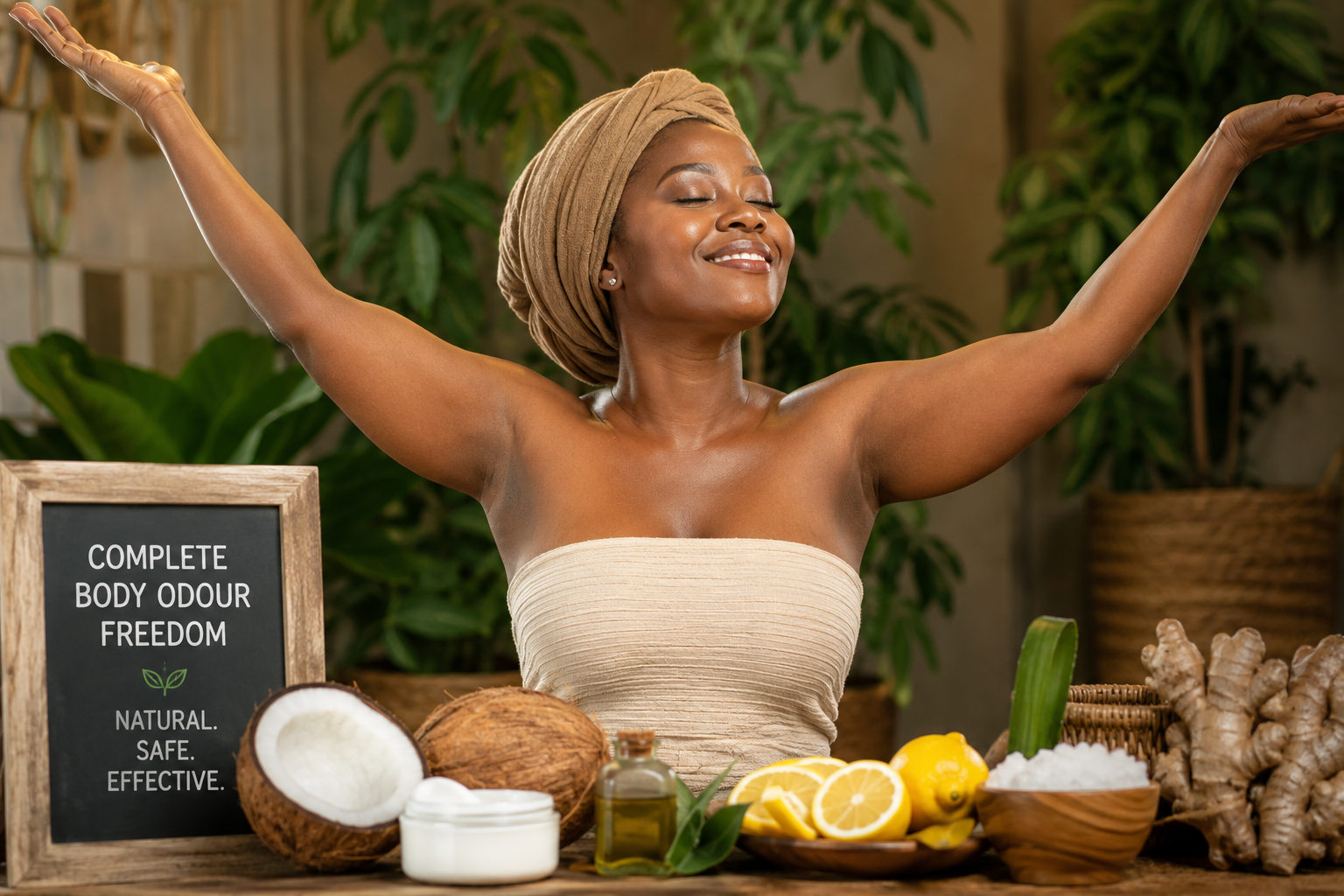
How One Woman's Worst Moment Became Every Woman's Answer
The woman who first showed me these habits did not have a medical degree. She did not have a laboratory. She did not have a YouTube channel or a clinic or a fancy title.
She had a kitchen, a mortar, and sixty seven years of watching women suffer from something that should have been solved generations ago.
But before I tell you about her, let me tell you about the woman who led me to her door.

Let me tell you about a woman I will call Ifeoma. Her story is one I have heard, in different forms, from so many women that it might as well be all of them. She was 31. Married with two children. She had a good job at a government office. From the outside, she had everything together.
From the inside, she was drowning.
The body odour started, or at least she first noticed it, after her second baby. She went back to work, walked into her open plan office, and within a week, she knew. She could smell herself. And she was certain her colleagues could too.
"I shower every morning with the most expensive soap I can find. I spray deodorant under my arms, on my chest, sometimes on my clothes. And by noon, by noon, I can smell myself. I know they can smell me too."
She tried everything. Dettol. Tetmosol. African black soap. Clinical strength deodorant at a premium price. Alum crystal stone. Baking soda paste, which burned her skin and left dark patches under her arms. Apple cider vinegar rinse. Charcoal soap. Tea tree soap. Dietary changes she read about on Google at 2am.
Nothing worked permanently. Some things helped for a day, maybe two. Then the odour returned, as if it had never left. As if it lived inside her.
She spent hundreds of dollars over two years on products that failed.
"My colleague moved her desk away from mine. She said it was to be closer to the window. But I saw the look on her face before she said it. I know what that look means."
Her husband Emmanuel stopped pulling her close at night. Her mother in law made a comment, casual, cutting, about "making sure she was washing well, well." She stopped hugging freely. She stopped raising her hands in church. She started carrying a towel and a travel size spray in her bag like weapons against her own body.
She was clean. She was meticulous. She was desperate.
And she was fighting the wrong war.
The Discovery That Changed Everything
It was a visit home, back to the village during Christmas, that changed the direction of everything.
Ifeoma's grandmother, Mama Ngozi, was 67 years old. She had never used deodorant in her life. She had never purchased an antibacterial soap. She had never stepped inside a pharmacy for a body odour product.
And she did not smell. Ever. Not in the dry season heat. Not after hours of cooking over a fire. Not after walking to the market and back under the afternoon sun.
"Nne, your body is talking to you. But you are trying to shut its mouth from the outside. The problem is not only about how clean your skin is. What you eat, your hormones, your stress, your health, it all shapes the sweat your body makes."
What Mama Ngozi explained, sitting on that wooden bench in her kitchen, grinding something in her mortar, was something no pharmacist, no dermatologist, and no soap advertisement had ever mentioned.
Body odour is not only about how clean your skin is. What happens inside your body, what you eat, your hormones, your stress, your health, shapes the sweat your body makes. And that sweat is exactly what the bacteria living on your skin feed on to create the smell.
Some of the foods you eat, garlic, onions, certain spices, contain compounds your body can release through your sweat. And for a small number of people, a condition called trimethylaminuria means the body struggles to break down a compound called trimethylamine, which can cause a strong odour. These are real, but they are only part of the story. For most women, everyday body odour comes down to one simple thing: bacteria on the skin breaking down sweat. You cannot fix that with perfume. You fix it with the right habits, the right ingredients, and a little consistency.
Mama Ngozi's morning drink, her paste, her daily habits, passed down from her grandmother, addressed the problem at the level where it could actually make a difference: the whole picture, not just the surface.
10 Days That Changed How She Felt About Her Body
Every body is different. Ifeoma's story is one example. Your experience may be faster or slower, and that is completely normal.
Ifeoma followed her grandmother's instructions. The morning drink, three ingredients she could find in any local market. The paste, a traditional recipe using shea butter, African black soap extract, and food grade alum in specific ratios Mama Ngozi had memorised since girlhood. The daily underarm care routine, a 3 minute morning ritual that Mama Ngozi said the women in the village had practised for generations.
Day 1: She made the drink. She drank it on an empty stomach. She noticed nothing different.
Day 2: She woke up and, for the first time in months, did not immediately notice the smell. It was subtle. But it was real.
Day 5: She went to work without the towel in her bag. She forgot it. She did not realise she had forgotten it until 3pm. By then, it did not matter. She had not needed it.
Day 8: Emmanuel pulled her close after dinner. Without her initiating it. Without her wearing perfume. He held her there for a long time. He breathed her in.
Day 10: Sunday service. Pastor said, "Lift your hands to the Most High."
Ifeoma lifted her hands. All the way up. Palms open. Eyes closed. No fear.
She cried during worship that day. Not from sadness. From freedom.
From One Woman's Kitchen To A Guide For Women Everywhere
Ifeoma told her friend. Her friend tried it. It helped. Her friend told three more women. They tried it. Because the approach is grounded in real biology, in how bacteria, sweat, diet, and daily habits actually work, it made a real difference for every one of them.
Women started asking: "Can you write it down? Can I have the recipe? Can you explain the steps?"
That is when we decided to document everything. We took Mama Ngozi's family wisdom. We checked every ingredient against what nutritional science actually says, the role of zinc in sweat, how diet affects skin bacteria, the importance of gentle cleansing over harsh scrubbing. We structured it into a clear, simple, day by day guide that any woman could follow.
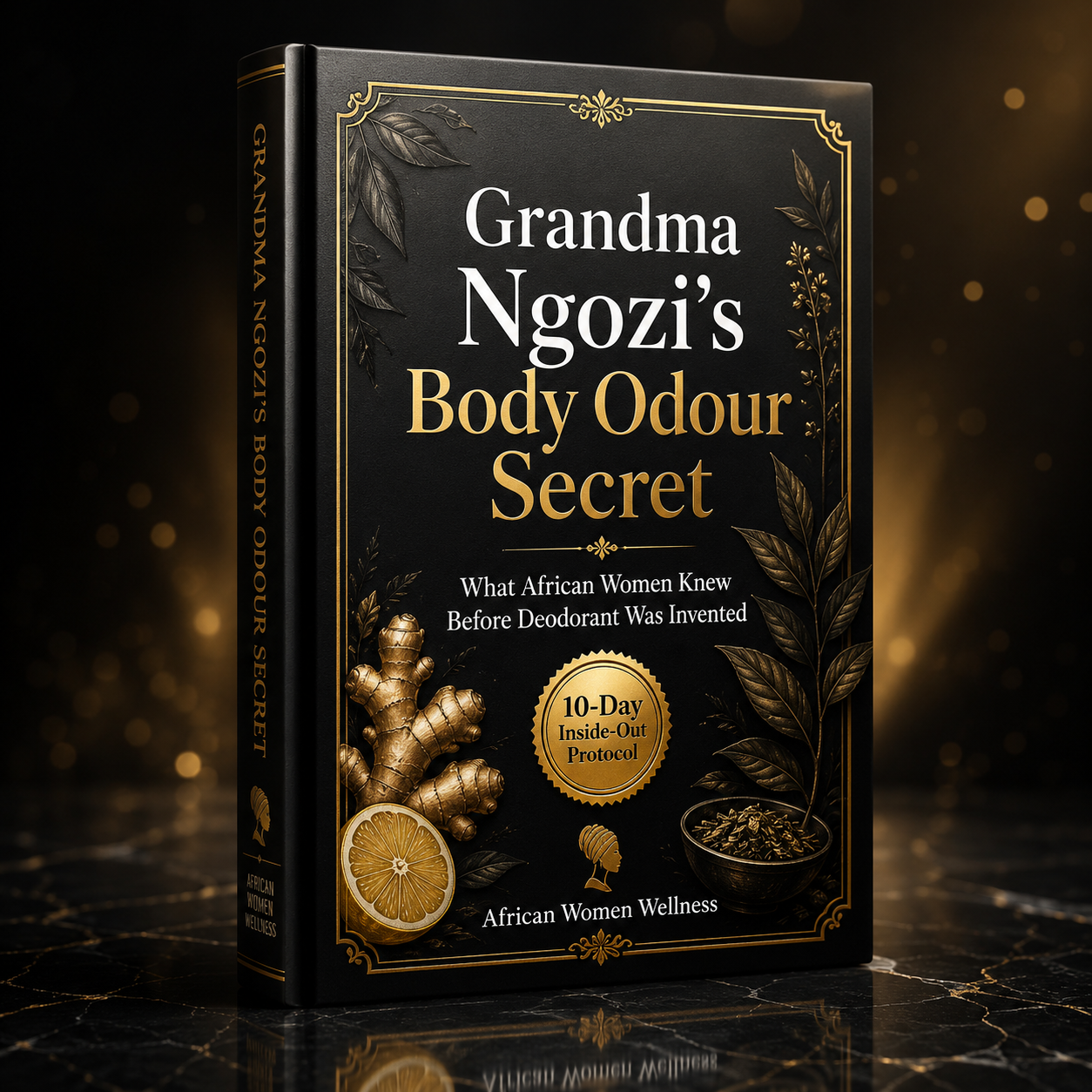
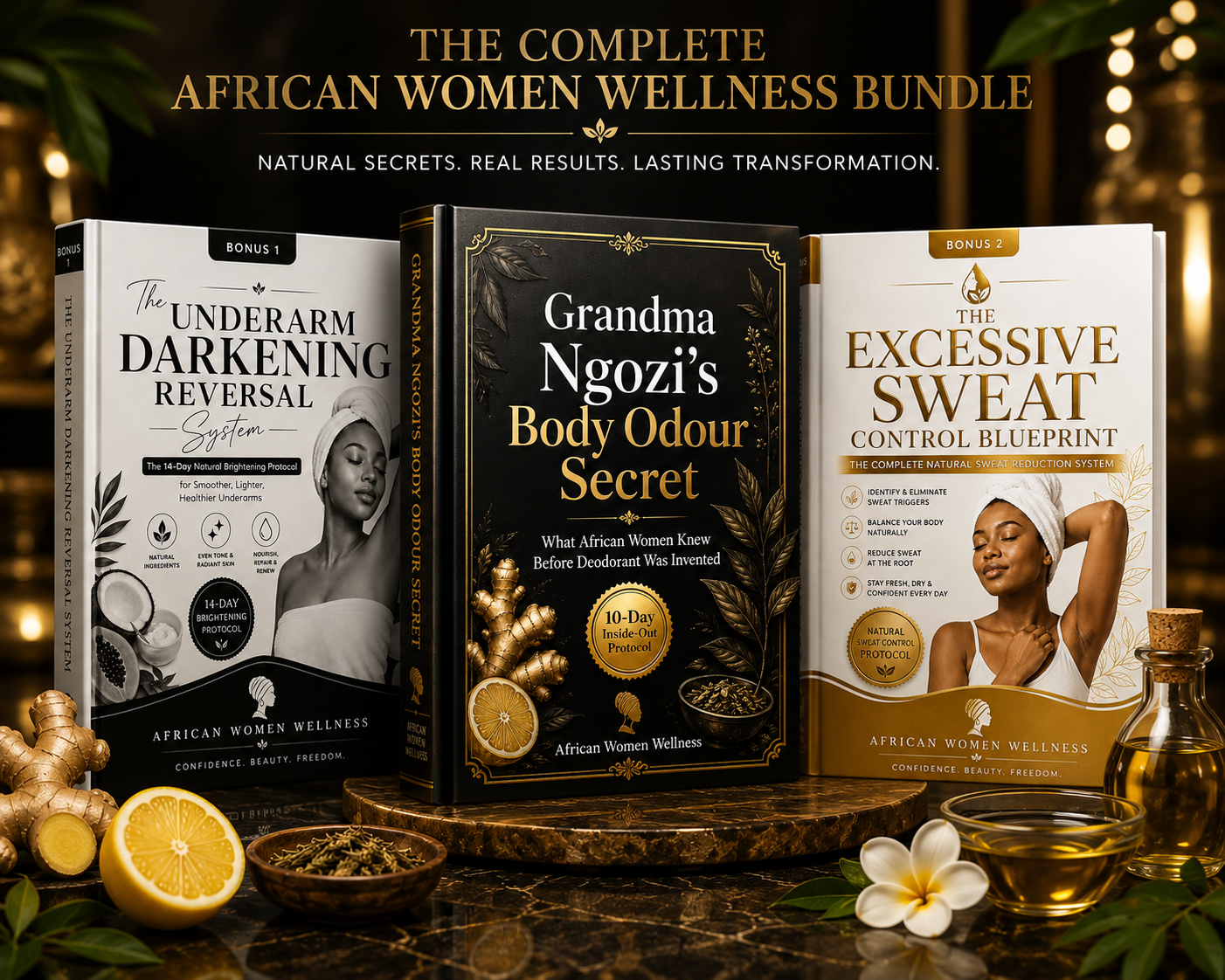
The result is a 72 page guide called Grandma Ngozi's Body Odour Secret.
And what I am about to show you is everything that is inside it.